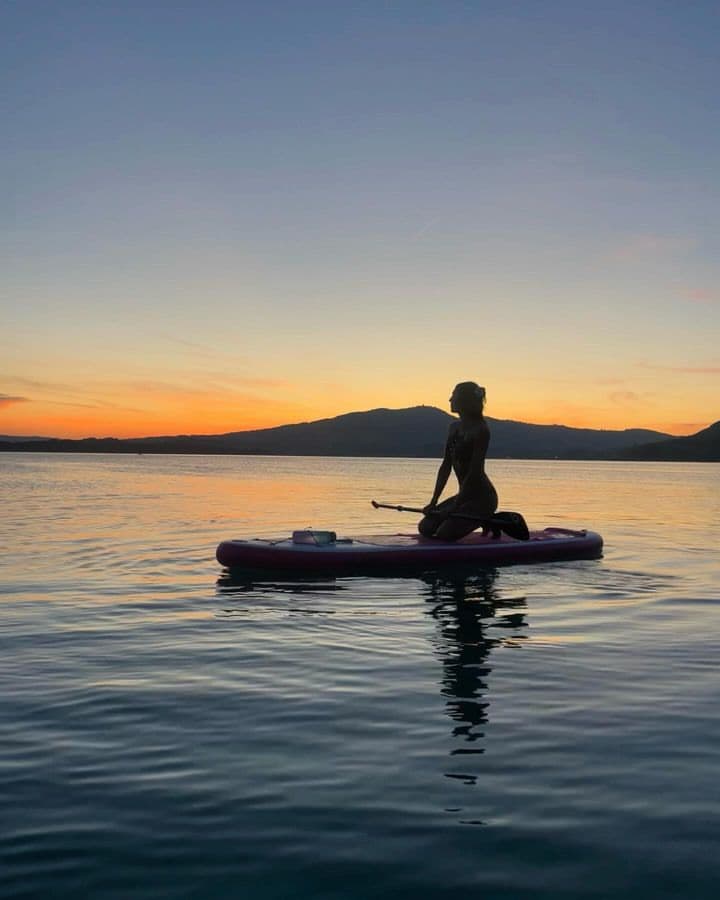
Stand-up paddleboarding (SUP) is paddling while standing on a board—but when you start well, it stops feeling like “just a sport.” Posture, breath, rhythm, and reading the water come together into something balanced: physically light, mentally clear.
Most first-timers worry about two things: whether they can stand, and whether falling in will feel embarrassing. In practice, your first session is shaped less by innate balance than by suitable equipment, calm water, and a pace that matches you—not a performance test.
Why SUP wins people over so quickly
SUP is relatively low-impact: it engages your core, back, shoulders, and stabilising muscles without hammering your joints. It can feel as approachable as a walk, with the extra calm that comes from being on the water. In sheltered bays like Tisan, Silifke, along the Mersin coast, a first session often starts softer than people expect.
A well-planned first outing usually ends with “let’s do that again”—because your body spends more time learning than bracing.
Another advantage is that the learning curve rarely feels punishing. Within the first ten to fifteen minutes, most people understand how the board responds—and basic movements start to click.
What you actually need to begin
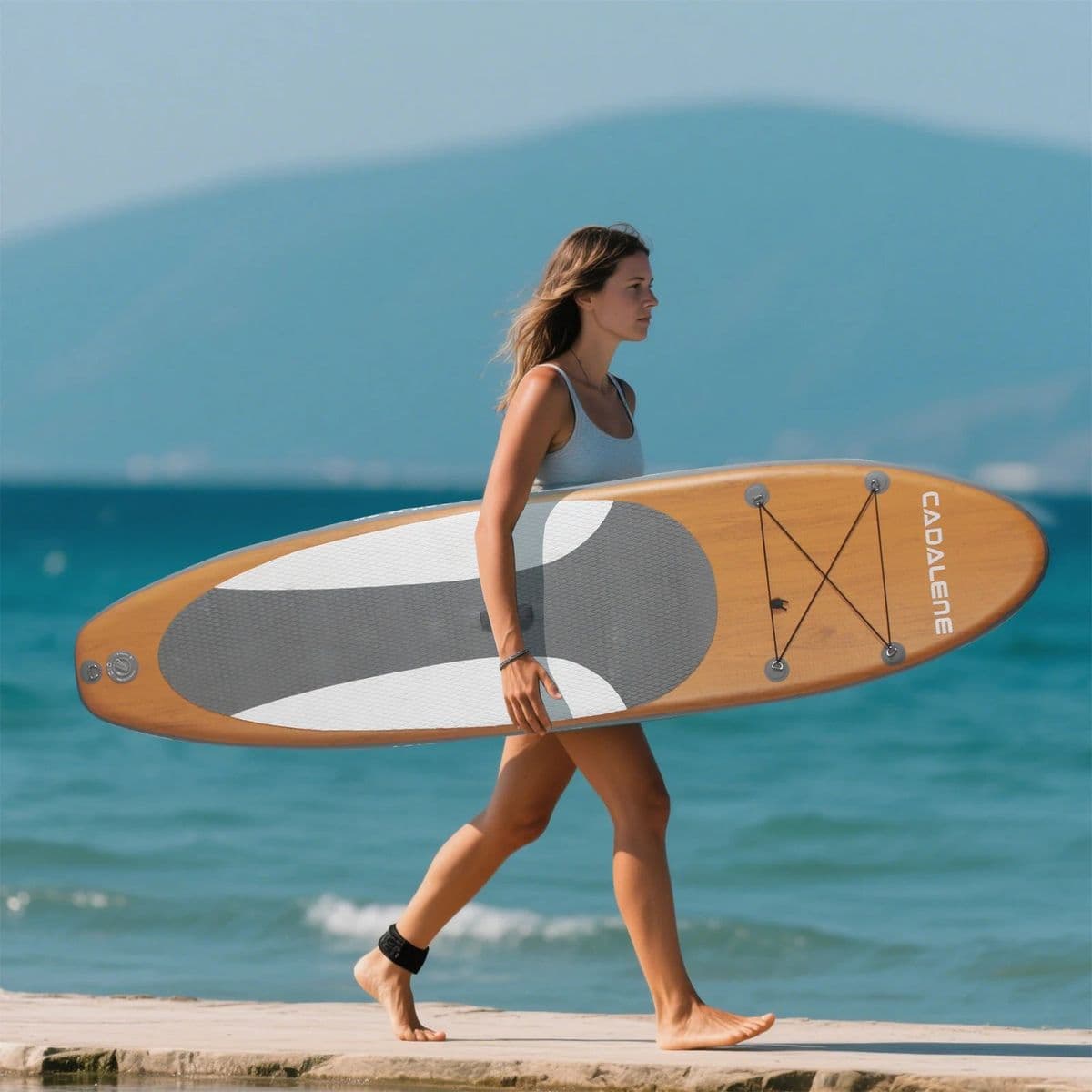
- A board with enough stability for your level
- A paddle adjusted to your height
- A life vest or appropriate flotation
- An ankle leash
- Sun protection and water, even on short sessions
A common mistake is choosing a board optimised for speed before you can stand with ease. The goal of a first session is not pace; it is a predictable feeling underfoot. Wider, forgiving platforms often teach faster than “advanced” shapes.
How to structure your first fifteen minutes
Instead of standing immediately, start on your knees. Stay near the centre of the board and use the paddle to build rhythm, not to fight micro-wobbles. At this stage, you are learning feedback: how the hull moves, how chop reads, how small shifts change balance.
When you feel ready, bring one foot up, then the other, slowly. Keep a soft bend in the knees. Let your gaze rest a few metres ahead—not on your feet. Balance usually improves when your head and spine stay quietly aligned.
Small details that matter before you launch
- Early mornings often offer the flattest water.
- A dry bag for your phone removes a surprising amount of mental noise.
- Treat the first session as short repeats, not a long crossing.
- Falling is information: it is often the fastest way to learn angle and weight transfer.
Why Tisan works well for beginners
In many hours, Tisan’s water becomes glassy and readable. That predictability matters more than Instagram-perfect conditions: you spend less energy fighting chop and more energy learning stance and stroke.

You do not need to be an athlete to begin SUP. The right bay, the right board, and a patient first flow create a better start than most people assume.